Whatever you do, don't let people tell you to "get over it."
Don't let them tell you that the election is over, and it's time to "move on."
When they say you're a "sore loser," don't listen.
Because that's not how this works. We don't elect people, give them the keys to the car, and then step away. It doesn't matter who won, we should never do that, although too often we do. Myself included. It is incumbent that we do exactly the opposite. Never forget: they work for us. And when they don't, it's important that we call them on it and demand better. We don't have to wait until we cast our ballot to do that.
So protest peacefully. Demand more of our free press. Ask them why they aren't covering what you see as important. Contact your representatives, even if it seems like there's not a chance they'll listen. Post stuff on Facebook and Twitter and be willing to lose friends who aren't willing to listen (just make sure you listen to them as well, and perhaps find points of agreement somewhere in the noise). Donate to causes that can help us fight back right now, like the ACLU.
It's important. All of it.
Saturday, November 19, 2016

Wednesday, February 10, 2016
My Interview with David Atkinson, Part Three
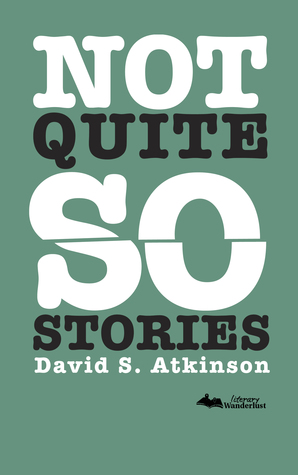
Welcome to part three of my interview with David Atkinson! Part two went terribly, so we scrapped it and decided to start again, and it went much better this time. Thank goodness for that. David is the author of Not Quite So Stories, a new short story collection from Literary Wanderlust that will be published on March 1st. I've read it already and it is terrific. On to the interview!(Part one can be found here.)
Jeremy: Bathrooms
are good. In the story “Domestic Ties,” there was an interesting idea put forth
that caused me to have deep thoughts. Do you think that forcing residents to
house excess prisoners would force all of us to take a deeper dive into the
Military-Industrial-Prison complex? Or would we all feel emboldened by the
knowledge that we are “doing our part?”
 David: Like the French hotel owner in "Changes
for the Château," I try to avoid most change if I can because I've barely
got a grip on my life now and any kind of change is more to try to handle.
Beyond that, I think we should consider the wise words of Grandpa Simpson:
David: Like the French hotel owner in "Changes
for the Château," I try to avoid most change if I can because I've barely
got a grip on my life now and any kind of change is more to try to handle.
Beyond that, I think we should consider the wise words of Grandpa Simpson:
 Jeremy: Peyton Manning did a great job directing
that film. Moving on, you put forth a strong case for how toilet paper
should be placed in the holder in “A Brief Account of the Toilet Paper War of
2012.” Is this an issue you are passionate about?
Jeremy: Peyton Manning did a great job directing
that film. Moving on, you put forth a strong case for how toilet paper
should be placed in the holder in “A Brief Account of the Toilet Paper War of
2012.” Is this an issue you are passionate about?
Jeremy: If you couldn’t be trapped in a Village Inn,
where would you be trapped?
David: For those who have read or seen S.F.W., I'd
have to throw a Fun-Stop out there. Nah, not really. If I had a choice, I'd
rather not be trapped at all. We're all trapped somewhere though. If there
isn't a choice, hopefully it has pancakes, comfy places to sit, and bathrooms.
| David's magnificent second book. |
David: This
story actually came out of an old SNL skit from the seventies I remembered
watching. At least, I remember it being SNL. From my guess, I'm not thinking
we'd get much more insight into the authoritarian structures of our society or
feel very duty emboldened for very long. Maybe I'm a little cynical, but I
think the thing that would happen fastest is a blurring of those lines we draw
in society and confusion of the roles interrelated there between. Humans don't
appear to handle sustained conceptual shakeup well, me being no different.
Jeremy: As a writer, what is the worst thing you can
do?
David: I try
not to think about this. People love a challenge (the behavior between the
husband and wife in "A Brief Account of the Great Toilet Paper War of 2012"
coming to mind) and I'm sure someone would get the urge to try to top anything
I came up with. I just don't want to be responsible for spawning something like
that. Better to not give anyone any incentive to go further.
Jeremy: Paper, plastic, or should we carry our
groceries from our car to our house with our own two hands, the way God
intended?
David: Personally, I'm not satisfied with the Biblical inconsistencies between the
advocacy of paper in Isaiah, the declaration of holiness of plastic in the
Psalms, and the insistence that anyone who doesn't carry their groceries by
hand is going to Hell as stated in the apocryphal Book of Maccabees. I think we
all have to answer this question for ourselves. If you want to be like Nan in
"The Onion She Carried," go for it. I'll try to refrain from judging.
Jeremy: You’ve lived in Nebraska and now live in
Colorado. Did you see any validity to the idea that northern Colorado would
form a new state with western Nebraska?
Grampa:
[writing a letter] Dear Mr. President, there are too many states these days.
Please eliminate three. I am NOT a crackpot.
Jeremy: I
think Grampa was on to something. If such a state was formed, the motto
would clearly be “Nothing to See Here,” right?
David: Omaha (The Movie) might disagree with
that. After all, Carhenge is out by Alliance. One of the central themes running
throughout this collection is that there is something to see everywhere, even
in northern Colorado and western Nebraska. We just often stop being able to
look.
David: This
story actually grew out of a fight my wife and I have about toilet paper. I'm a
strict "over the roll" adherent. My wife, on the other hand,
frequently runs out a roll and leaves it that way. She's doubtlessly going to
be damned in the afterlife, but I proselytize regularly in an effort to save
her soul.
Jeremy: With my
last book, someone on Amazon said that they placed it in the recyclable bin.
Can Not Quite So Stories be recycled? How is it in a compost pile?
David: The
electronic version is highly recyclable. Rearranging the bits, one can form a
variety of different digital works. Those ones and zeroes can be reused indefinitely.
Of course, this doesn't apply to digital copies in the UK. They've got laws
there about that and I think new works can only contain as much as 85%
postconsumer recycled bits without having to be labeled as used. On an
unrelated note, I think "compost" would have been an acceptable
alternative name for email. You know, "com" short for computer or
communication network and "post" short for post office or postal
service.
Jeremy: It is truly refreshing to see someone so committed
to being green, particularly in the neglected area of digital recycling. Well
done. Any last thoughts you’d like to offer? Or if you haven’t thought
about your answers before this, perhaps you’d like to try it for this final
question?
David: I'm
suddenly remembering an old Pogo comic that had a couple politician
caricature animals trying to deal with a populace-monitoring computer that kept
exploding. One said something to the other and followed that up with:
"Don't you think?" The other ignored the first part and responded
only to the second by saying: "Every Saturday, need it or not." I'll
go with that here, and as a general commentary on this entire book.
Tuesday, February 9, 2016
My Interview with David Atkinson, Part One
 |
| Are you getting enough oxygen? |
So it was awesome to be able to talk to him about the book. But rather than go the typical route of "why did you decide to write this book" and so forth (not that there's anything wrong with that), we decided to veer left, with me doing my best Space Ghost impression, while Dave did his best, um, Space Ghost's guest impression. Hopefully you find it entertaining!
Jeremy: Ignoring the fact that you have published two other books, Not Quite So Stories is your first book. What made you feel like a short story collection was the way to go right now?
David: The hypnogerms are the most likely explanation. I never should have eaten those ribs after that Gatlin Brothers concert in Branson. It's either that or the fact that this one is a short story collection. It being what it is, I kind of had to go with that. Trying to con people into thinking it was a novel would probably get me into trouble again. Besides, after doing a novel in story form and a novel, why not complete the circuit? Actually, I started work on the stories in here before the other two books had come together. It only came together and found a home after, so the timing is kind of coincidence. Or…is it?

David: "G-Men." That's the first story in the collection, all about the Skydiving Security Administration screening jumpers during freefall to keep us all safe. That's what you mean by "only read 1," right?
Jeremy: Yes, that is correct. Smart idea starting with your favorite story first. I've always thought it was better for a book to start horribly and get better so that by the end, you think you've read something decent, but there could be merits to your approach.
Now obviously the title was influenced by Kipling’s Just So Stories. Any fear of a backlash when people see that there aren’t any stories about how a penguin got its spots?
Now obviously the title was influenced by Kipling’s Just So Stories. Any fear of a backlash when people see that there aren’t any stories about how a penguin got its spots?
Thursday, December 17, 2015
Fixing The Phantom Menace
Here we are. After a thirty-two year wait, finally, her eon December 17th, 2015, the world will finally be able to watch the sequel to Return of the Jedi. What a glorious day. The last thing anyone needs to do on a day like today is dredge up old wounds and talk about the last Star Wars movie that opened to massive, massive hype following a long break
between films. You know, The Phantom Menace.
No, nobody wants that.
But let's do it anyway.
Now I am not doing this to take another crap on the prequels. But, they are fresh in my mind, as I geared up for the new film by rewatching all 6. In doing so, I was struck by a surprising thought--The Phantom Menace isn't that bad. No, really. There are far worse movies out there. Believe me.
But it isn't that good, either. Now that I've written a book or two, and made some mistakes along the way, I've discovered a couple of things. One, I am more forgiving when things go wrong. Creating plots and characters that entertain and make sense is hard. Really hard. Two, when things do go wrong, I like to brainstorm on how these plots and characters could be fixed. I have to do it with my own stories all the time, so it's only natural that the urge would strike me while viewing others.
Which brings me to Episode One. How would I make it better? Can it be fixed? Could it have gone from mediocre to good, maybe even great? We'll never know. besides, my proposed changes probably suck, too. Even if they don't, George Lucas wasn't exactly going to call me up to serve as a script doctor. I was like a freshman in college.
Nonetheless, here are five changes that I believe very well may have rescued The Phantom Menace from mediocrity. In the interest of fair play, I tried to hue close to what we were presented with. I don't think it'd be realistic to completely change the plot or remove characters. My hypothetical changes should be looked at as adjustments to the nearly-final draft, not the first.
 The Voices
The first change I prose is a simple one--change the voices. Every single voice from a non-human character is horrid. The only exceptions would be Darth Maul--his voice isn't great but it works--it's used sparingly regardless--and holdovers from the original films like Jabba the Hutt, C3PO, etc. Those voices were locked in, whether they worked or not (they all do, though).
No, nobody wants that.
But let's do it anyway.
Now I am not doing this to take another crap on the prequels. But, they are fresh in my mind, as I geared up for the new film by rewatching all 6. In doing so, I was struck by a surprising thought--The Phantom Menace isn't that bad. No, really. There are far worse movies out there. Believe me.
But it isn't that good, either. Now that I've written a book or two, and made some mistakes along the way, I've discovered a couple of things. One, I am more forgiving when things go wrong. Creating plots and characters that entertain and make sense is hard. Really hard. Two, when things do go wrong, I like to brainstorm on how these plots and characters could be fixed. I have to do it with my own stories all the time, so it's only natural that the urge would strike me while viewing others.
Which brings me to Episode One. How would I make it better? Can it be fixed? Could it have gone from mediocre to good, maybe even great? We'll never know. besides, my proposed changes probably suck, too. Even if they don't, George Lucas wasn't exactly going to call me up to serve as a script doctor. I was like a freshman in college.
Nonetheless, here are five changes that I believe very well may have rescued The Phantom Menace from mediocrity. In the interest of fair play, I tried to hue close to what we were presented with. I don't think it'd be realistic to completely change the plot or remove characters. My hypothetical changes should be looked at as adjustments to the nearly-final draft, not the first.
The first change I prose is a simple one--change the voices. Every single voice from a non-human character is horrid. The only exceptions would be Darth Maul--his voice isn't great but it works--it's used sparingly regardless--and holdovers from the original films like Jabba the Hutt, C3PO, etc. Those voices were locked in, whether they worked or not (they all do, though).
Saturday, December 12, 2015
Adolf Hitler in Oz
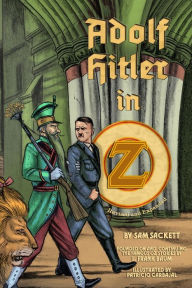
Then again, maybe that doesn't seem so funny to you. Maybe you grew up watching the famous movie as many times as I did. Maybe you read some of the books,
or saw some of the belated sequels. Maybe Oz is real to you, too.
So when I heard that Adolf Hitler was coming to Oz, needless to say, I
was concerned. After all, we know what he did to Europe. Would Oz fare
any better?
Friday, November 13, 2015
The Lady and the Tiger
When
great things happen, artists are inspired. So when the epic events that
captivated our city some two weeks ago transpired, needless to say, I
was
very inspired. My first
reaction was to compose a poem, as witnessed here. But the urge to document this great
event was not satisfied. So I began a new attempt, a short story, one
that should stand for all time as a historical record of the fine
achievement of one lady
who dared to “cross the line” one early morning in November. Tiger
Lady, I salute you; may this story in some way do small justice to
your triumph.
Furthermore, it will stand as a record of the time I swiftly and completely torpedoed any chance I ever had at having a writing career. I doubt very seriously I will sell another book once this masterpiece is unleashed.
Without
further ado, as I prepare to bid adieu, allow me to present “The Lady
and the Tiger.” I would say, “Enjoy”, but I make it a point to never
demand the impossible.
THE LADY AND THE TIGER
Or, A Work of Considerable Importance
By Someone Who is Not Jeremy Morong
The
parking lot was vast. It was long and cold. When cars would zip by on 13th Street, the drivers and passengers inside would speak of what once was:
Rosenblatt, the home of cheering throngs who delighted in the exploits of college
baseballers. But no more. At this late hour it sat empty, but only temporarily, for it eagerly awaited teems of mini-vans and
SUVs that would arrive loaded to bear with eager children and beleaguered parents. They would journey forsooth in search of the big city pleasures found at the world-renowned Omaha Henry Doorly
Zoo, the enterprise that had taken over this plot of land, the first phase of their plot for world domination in the field of zoology. A lofty goal, perhaps, but achievable, as it was no mere row of cages like the zoos of yore; this fine facility boasted
wild jungles, shark-filled oceans, and a rolling savanna, among other
recreations of the natural world.
The
lot was not quite empty, however. One car dared to makes its residence here, idling
loudly as it crisscrossed two handicap parking spaces. When the engine quieted,
a gentle voice could be heard within. “Dear lady, please wake up.” This was
followed by a tender shaking of the woman’s shoulder.
Friday, November 6, 2015
Review of Spectre aka Bond 24

I enjoyed the film. It's entertaining. It's Bond. There's tons of what makes James Bond James Bond. But the truth is, while greatest hits sets have their place, I've always preferred listening to the original albums, with the songs slotted in their proper place rather than the haphazard running order in which those collections are often assembled. Ultimately, I feel somewhat the same with this film, with the parts never quite reaching a fully satisfying whole. Still, Craig continues to play the part well, and there's enough going on for most to find something to enjoy, and likely a lot more than that.
Tuesday, November 3, 2015
A Poem About a Woman Who Broke Into the Zoo and Was Bit by a Tiger That She was Trying to Pet and Take a Selfie With…Allegedly
She stuck her hand inside the cage,
And oh! That Tiger felt such rage,
If only she knew better at her age,
But no! His jaws would not assuage,
Through the iron bars, standard gauge,
And oh! They’ve made the front page,
The world is naught but their stage,
But no! Her finger gone, a costly wage.
And oh! That Tiger felt such rage,
If only she knew better at her age,
But no! His jaws would not assuage,
Through the iron bars, standard gauge,
And oh! They’ve made the front page,
The world is naught but their stage,
But no! Her finger gone, a costly wage.
Subscribe to:
Posts (Atom)